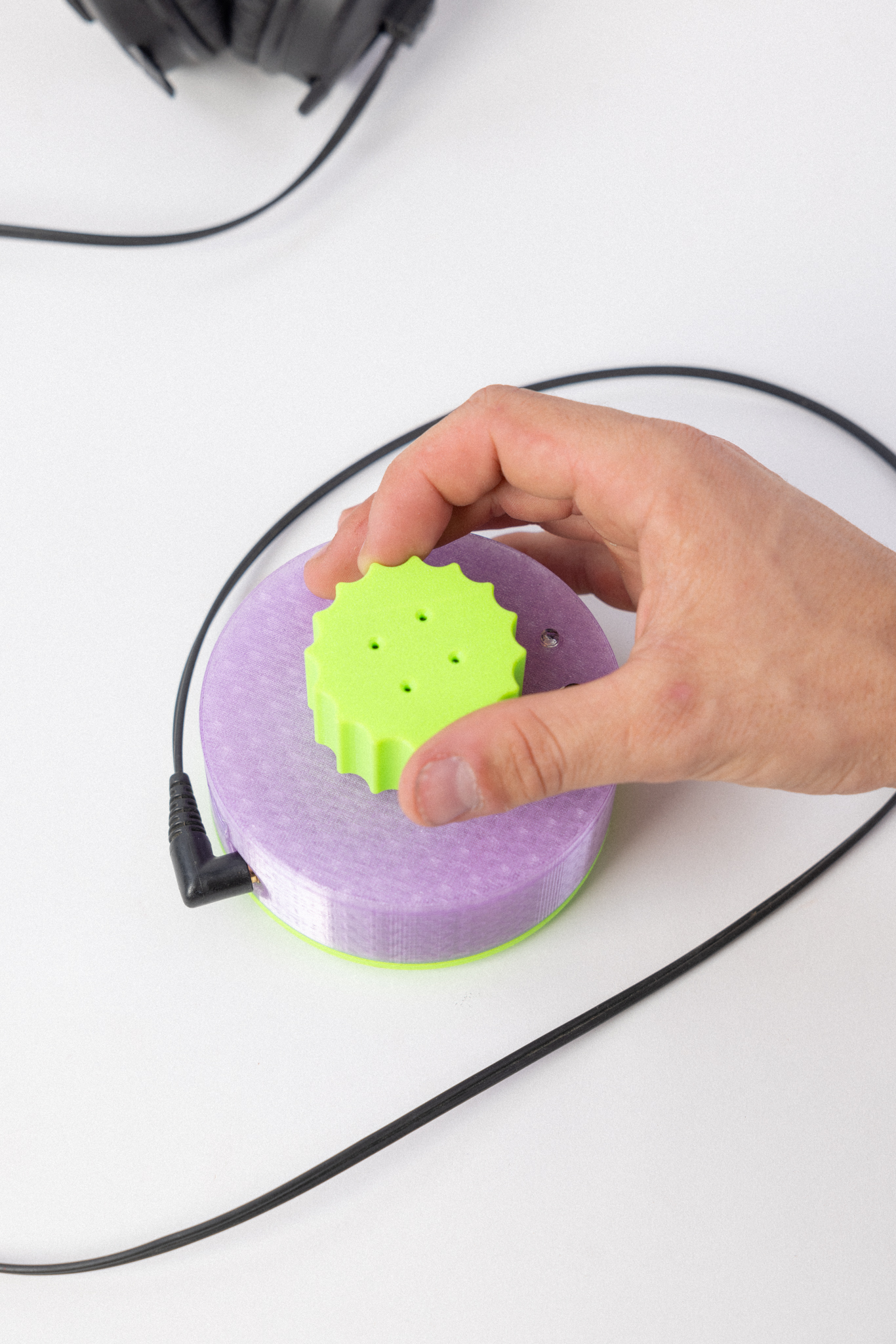
Sensory Anchor
A tactile interface that redirects feedback from the visual to the haptic channel, allowing users to focus more fully on sound. This shift is based on sensory ergonomics and aims to reduce distraction caused by dominant sensory pathways. The Sensory Anchor explores how interfaces can be designed not to steal our attention, but to guide it more meaningfully. This project was developed in 2025 at UDK (University of Arts Berlin) in the course Digital Interaction about sabotage under the supervision of Prof. Aeneas Stankowski and Lukas Henneberger.
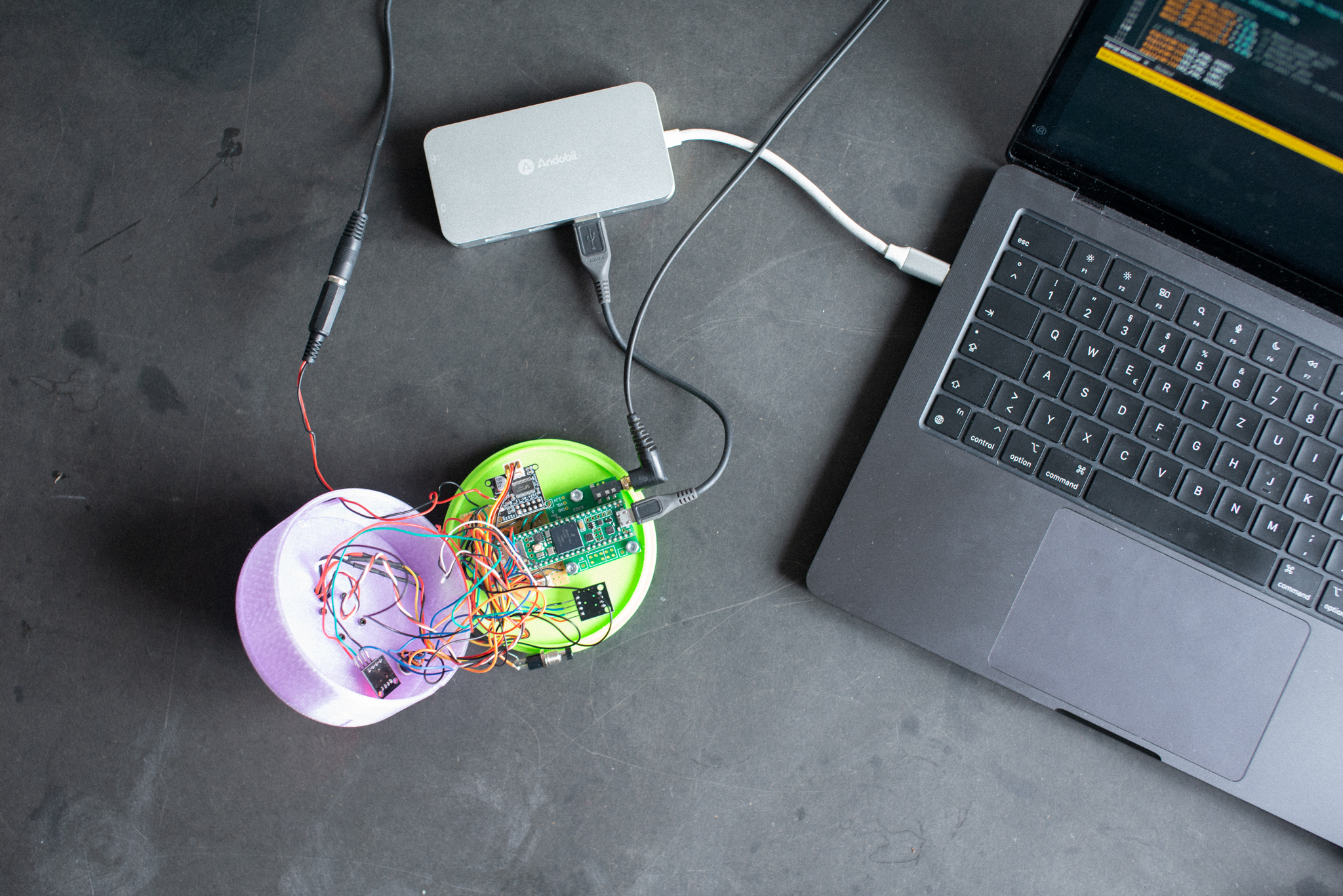
Dominance ≠ Clarity
In traditional audio interfaces, feedback is largely visual: blinking LEDs, screens, sliders, and waveform visualizers. But the eye is a dominant sense, and visual feedback can override what we actually hear. This imbalance can distort how we perceive sound and lead us to rely on what we see instead of what we sense.
The Sensory Anchor rethinks this paradigm. Using a brushless motor and programmed tactile patterns, it introduces a new form of feedback, one that communicates through touch instead of sight. Rotational modes with different haptic textures enable intuitive interaction without pulling attention away from the sound itself.
Rooted in the framework of sensory ergonomics, the project explores how interfaces influence perception. By translating feedback into less dominant sensory channels, it creates space for the primary input — in this case, sound — to stand on its own.
This approach aims to reduce sensory conflict, a mismatch between input and feedback that can occur when dominant senses override subtle ones. By anchoring feedback in the body (through the hand), rather than in the eyes, the user is encouraged to listen more deeply and more consciously.
The Sensory Anchor was developed as part of the “Sabotage” studio in the Product Design department at the University of the Arts Berlin. While the course framed sabotage as a creative tool for critique, this project turns the idea around: it prevents sensory sabotage by reducing overstimulation and restoring perceptual balance. Ultimately, the Sensory Anchor isnt about adding complexity. Its about subtracting noise and guiding attention back to what matters.